
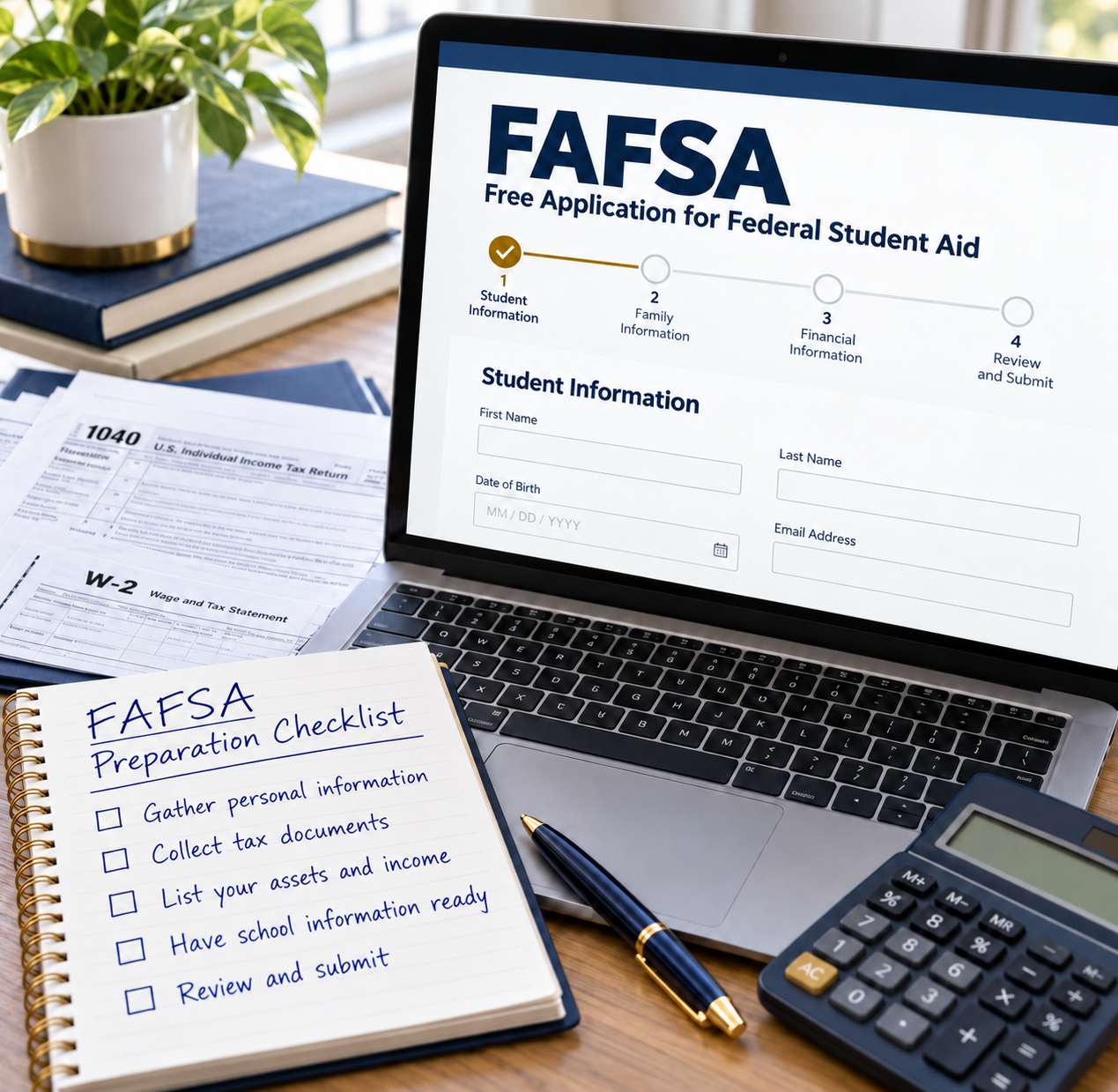
The FAFSA is open, and for families with a college-bound student, that is your cue to get moving. The Free Application for Federal Student Aid is the single most important step in paying for college, and completing it early and correctly can make a difference in the aid your student receives.
If the FAFSA feels intimidating, you are not alone. It has a reputation for being complicated, and recent years brought some changes to the process. But the core of what you need to know is manageable, and understanding it now puts your family in a strong position. Here is what every family should understand about the form and why getting it done early matters.
What the FAFSA Actually Does
The FAFSA is the application that determines your student’s eligibility for federal financial aid, and it is the gateway to far more than just federal programs. Completing it is what opens the door to grants, work-study, and federal student loans, and it is also used by most states, colleges, and many scholarship programs to award their own aid.
This last point is one that families miss. Even if you assume you will not qualify for federal aid, many colleges and states require a completed FAFSA to be considered for their own grants, scholarships, and aid programs. Skipping it because you think you earn too much can mean leaving institutional and state aid on the table that you would have qualified for. For the vast majority of families, filling it out is worth the effort regardless of income. The aid this application unlocks includes need-based grants like the Pell Grant for eligible students, work-study opportunities, and access to federal student loans, which generally offer better terms than private loans. It is the foundation the entire financial aid process is built on.
Why Filing Early Matters
Now that the FAFSA is open, the most valuable piece of advice is to file as early as you can. There are a few concrete reasons this matters:
- Some aid is awarded on a first-come, first-served basis until the funds run out. Certain federal, state, and institutional aid programs have limited funding, and students who file early have a better shot at those dollars than students who wait. Filing early simply puts your student in a better position to receive everything they qualify for.
- Deadlines vary, and they can come sooner than you expect. Federal, state, and individual college deadlines are all different, and some state and college deadlines are considerably earlier than the federal one. Filing early ensures you do not accidentally miss a deadline that affects a significant chunk of aid. It also gives you time to fix any errors or respond to requests for additional information without being under pressure.
- Filing early gives your family financial clarity sooner. Knowing what aid your student qualifies for earlier in the process helps you compare offers, plan, and make decisions about affordability with real numbers rather than guesses.
Gather Your Information First
The process goes much more smoothly if you gather what you need before you sit down to fill it out. Scrambling for documents midway through is where a lot of the frustration comes from. Generally, you will need financial information including tax returns and records of income, and the FAFSA uses tax information from a prior year rather than the current one, so you are working from records you already have. You will also need information about assets and other financial details, along with personal identifying information for both the student and the contributors to the form, typically the parents for a dependent student.
Both the student and the parent will each need their own account to complete and sign the form. Setting these up ahead of time, if you have not already, removes a common point of delay.
Understand Who Counts as a Contributor
One aspect of the FAFSA that causes confusion is the question of whose information goes on the form. It asks for financial information from the student and from contributors, which generally means parents for a dependent student.
Which parent’s information is required can depend on your family’s situation, particularly for divorced or separated families, where the rules about which parent contributes are based on specific guidelines. Each contributor completes their own portion of the form using their own account. If your family situation is anything other than straightforward, it is worth understanding the contributor rules before you begin, since getting this part right matters for an accurate application.
Do Not Assume You Make Too Much to Qualify
This is worth its own section because it is one of the most common and costly mistakes families make. Many families assume their income is too high to qualify for any aid and skip the FAFSA entirely. This is frequently a mistake.
Eligibility for aid depends on more than just income, and the formula accounts for various factors. Beyond that, as noted earlier, many colleges and states use it to award their own aid, some of which is not purely need-based. And federal student loans, which generally offer better terms and protections than private loans, are available regardless of income but require a completed FAFSA to access.
The effort of completing the form is modest compared to the potential downside of missing out on aid your student qualifies for. Unless you are certain it makes no sense for your situation, filing is almost always the better choice.
Completing the Form
The FAFSA itself has become more streamlined than it was in years past, with a simpler process for many families, including the ability to import tax information directly in many cases. For most families, the form is more manageable than its reputation suggests, particularly if you have gathered your information in advance.
Take your time and read each question carefully, since small errors can cause delays or affect your results. After submitting, you will receive a summary of your information, and it is worth reviewing it for accuracy. Colleges your student listed will use this information to put together financial aid offers, which is where the real numbers start to come into focus.
If you run into questions or your situation is complex, the team at Lighthouse College Planning can help! We help families navigate the financial aid process as part of a complete approach to college planning. Whether you have questions about the FAFSA, want help understanding your aid offers, or need guidance on the bigger financial picture of paying for college, our team is here to help you approach it all with clarity and confidence. Reaching out early, while the window is open and the pressure is low, is the best way to make the most of it.
Frequently Asked Questions About the FAFSA
When is the FAFSA due?
There is no single deadline. The federal deadline, state deadlines, and individual college deadlines are all different, and some state and college deadlines come much earlier than the federal one. Because of that, the safest approach is to file as early as you can and to check the specific deadlines for your state and each college on your student’s list.
Should I fill it out if I think we make too much money?
Yes, in almost all cases. Many families who assume they will not qualify end up eligible for aid, and many colleges and states require a completed FAFSA for their own aid programs regardless of income. Federal student loans, which have better terms than most private loans, also require the FAFSA. Skipping it often means leaving money on the table.
What do I need to fill out the FAFSA?
Financial information including tax returns and income records, information about assets, and personal identifying details for both the student and the parent contributors. Both the student and a parent will need their own accounts to complete and sign the form. Gathering everything before you start makes the process much smoother.
Who needs to provide information on the form?
The student and their contributors, which generally means parents for a dependent student. For divorced or separated families, which parent provides information depends on specific guidelines, so it is worth understanding those rules before you begin if your situation is not straightforward.
Why should I file early if aid is based on need?
Because some aid is limited and awarded until the funds run out, so filing early improves your student’s chances at those dollars. It also protects you from missing earlier state and college deadlines.
Do I have to pay to file the FAFSA?
The FAFSA itself is free to submit through the official site, StudentAid.gov. Some families choose to work with a professional, like the team at Lighthouse College Planning, for guidance and help completing it accurately, especially when their situation is complex. That support is optional, but it can save time and help avoid costly mistakes.