
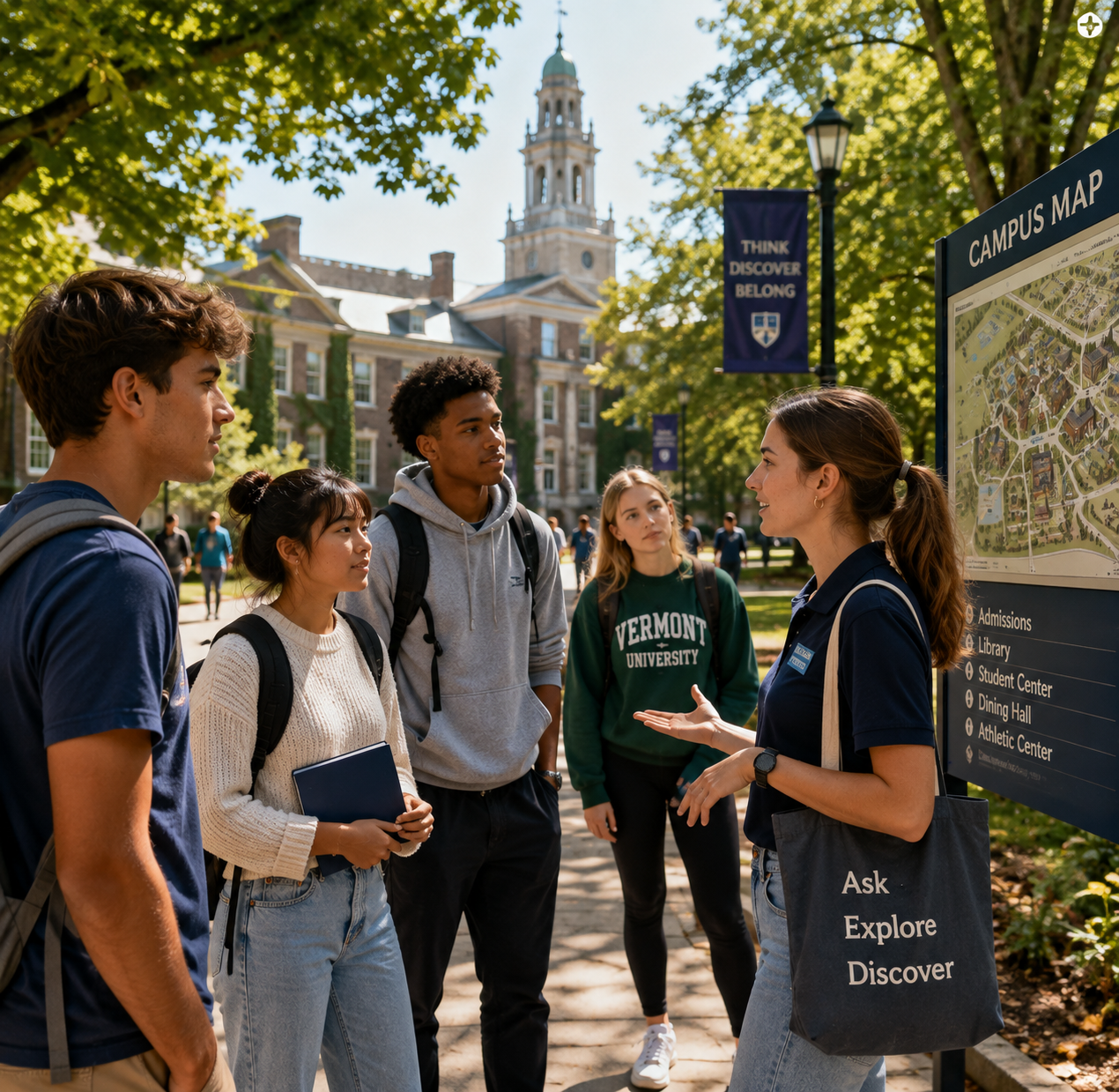
There is only so much you can learn about a college from a website or a brochure. The photos are always sunny, the students always look happy, and every school claims to offer the perfect balance of academics and community. College campus tours are where you get past the marketing and start to figure out what a school actually feels like, which is something no amount of online research can fully capture.
But a tour is only as useful as you make it. Show up passive and unprepared and you get the same polished pitch everyone else gets. Show up with a plan and the right questions and you can walk away with a real sense of whether a school fits you. Here is how to get the most out of every visit.
Do Your Homework Before You Go
The students who get the most out of campus tours arrive already knowing the basics. If you spend the tour learning things you could have read online, you are wasting the one chance you have to experience the place in person.
Before you visit, get familiar with the school’s size, location, academic programs, and general character. Know whether it is a large research university or a small liberal arts college, whether it is in a city or a college town, and what it is known for academically. This background lets you spend the visit digging into what only a visit can reveal, like the atmosphere, the people, and whether you can picture yourself there. It also helps to come in with a few specific questions in mind. If you are interested in a particular major, research it ahead of time so you can ask informed questions. A little preparation turns a generic tour into a targeted one.
Take the Official Tour, But Don’t Stop There
The official guided tour is worth taking. It gives you a solid overview, hits the highlights, and lets you ask your guide questions. But official tours are designed to show the school at its best, so what you see is the polished version.
The real value often comes from what you do around the official tour. Build in time to explore on your own, away from the guide and the script. Wander through areas that were not on the route, sit in a common space and watch how students interact, and walk the parts of campus where students actually spend their time, not just the showcase buildings.
If you can, eat in a dining hall. Food aside, it is one of the best places to observe the everyday rhythm of student life. Are people talking and engaged, or heads-down and isolated? Does the atmosphere feel like somewhere you would want to spend four years? These impressions are hard to get any other way.
Ask Better Questions
The quality of what you learn on a tour depends heavily on the questions you ask. Generic questions get you the generic pitch, while specific, thoughtful questions get you real answers.
Ask your tour guide about their actual experience rather than sticking to logistics. What surprised them about the school? What do they wish they had known before enrolling? Tour guides are students too, and if you ask genuine questions, many will give you honest answers that go well beyond the official talking points. Beyond your guide, seek out other students if you can, since the people who are not paid to represent the school often give the most candid perspective. Some questions worth asking include what students do on weekends, how easy it is to get into the classes you need, and what support is available when students struggle. Questions about real daily life tend to reveal more than statistics you could look up anyway.
Pay Attention to How the Place Feels
Beyond the facts and the questions, part of evaluating a school is paying attention to your own reactions. A campus can look perfect on paper and still feel wrong when you are standing on it, or it can surprise you by feeling like home when you did not expect it to. Notice your gut reaction as you walk around. Do you feel comfortable or out of place? Can you picture yourself living here? These impressions are not everything, and you should not let a single bad moment sour an otherwise good fit, but your instincts are worth listening to as one input among many. Pay attention to the practical feel of the place too, like how far apart things are and what the surrounding neighborhood offers. These everyday realities will shape your experience far more than the impressive lobby of a building you will rarely enter.
Take Notes and Photos
After you have visited a few schools, they start to blur together. The dining hall at one blends into the library at another, and you lose track of which campus had the feature you loved and which one felt off. Jot down your reactions during or right after each visit while they are fresh, noting what stood out, what concerned you, and how the place made you feel, and take photos of the details that mattered to you. Rating the same categories across schools, like academics, campus feel, location, and student vibe, gives you a fair basis for comparison and makes the eventual decision much clearer than relying on memory of a tour you took months earlier.
Make the Most of Special Opportunities
Many schools offer more than just the standard walking tour, and taking advantage of these options gives you a fuller picture.
If the school offers information sessions, department visits, or the chance to sit in on a class, take them. Sitting in on a class in a subject you are interested in tells you a lot about the teaching style and academic atmosphere, and meeting with someone from a department you are considering can answer questions the general tour cannot. Some schools also offer overnight visits where you stay with a current student, which is one of the best ways to experience real student life if the opportunity is available.
Do Not Rush It
It is tempting to pack multiple schools into a single day or a tight weekend, especially if you are traveling. But rushing from campus to campus makes it hard to absorb any of them and blurs your impressions together. Quality of attention matters more than the number of schools you see, and a thoughtful visit to a few schools will serve you far better than a rushed march through many. If your time is limited, be selective about which schools warrant an in-person visit rather than trying to see everything.
Turning Visits Into Decisions
Campus tours are one of the most valuable parts of the college search, because they give you something the rankings and brochures never can: a real sense of whether a place fits you. The students who use them well come prepared, look past the polished presentation, ask genuine questions, and pay attention to both the facts and their own reactions.
If you would like help figuring out which schools are worth visiting, what to look for during your tours, or how to turn your impressions into a smart final decision, that is exactly the kind of guidance a college planning advisor can offer. At Lighthouse College Planning, we help students and families navigate the entire search process, from building a school list to making the final choice with confidence.
Frequently Asked Questions About College Campus Tours
When is the best time to visit a college campus?
Visiting while school is in session generally gives you the most authentic picture, since you get to see the campus alive with students. Summer visits are still worthwhile if that is when you can go, but the campus will feel quieter and less representative of normal life.
How many colleges should I tour?
There is no perfect number, but quality matters more than quantity. It is better to visit a handful of schools thoughtfully than to rush through many. Focus your in-person visits on schools you are seriously considering, and give each one enough time to take it in properly.
What should I ask on a college tour?
Ask specific, genuine questions rather than ones you could answer online. Good ones include what your tour guide wishes they had known before enrolling, what students do on weekends, how easy it is to get into required classes, and what support is available when students struggle. Questions about real daily life tend to be the most revealing.
Should I visit even if I have already been accepted?
Yes, if you can. Visiting after acceptance, especially at admitted student events, can be one of the most useful visits of all, because you are now deciding whether to actually attend. Experiencing the campus with that mindset and meeting future classmates can make your final decision much clearer.
What if I cannot afford to travel for campus visits?
Many schools offer virtual tours and online information sessions, which are a valuable alternative when in-person visits are not possible. They cannot fully replace the feel of being on campus, but they can help you narrow your list. Some schools also offer travel assistance for admitted students, so it is worth asking.
How do I keep track of everything after visiting several schools?
Take notes and photos during or right after each visit while your impressions are fresh. Recording the same categories for every school, like academics, campus feel, location, and student vibe, gives you a fair basis for comparison. These records are far more reliable than memory when it comes time to compare schools and decide.